

Average Penis Size: What Research Says & Condom Fit
Posted by Condoms Australia on 11th Nov 2026
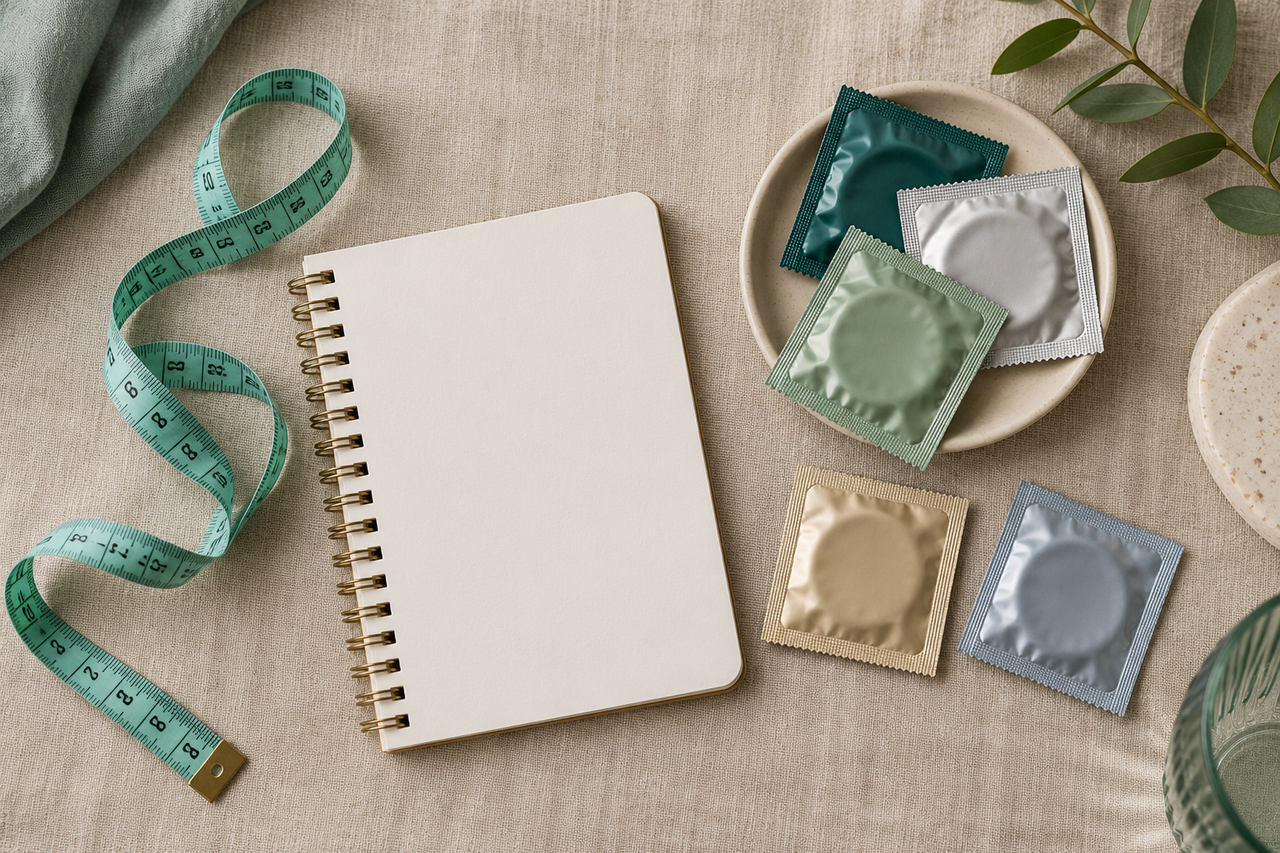
If you've ever searched for the average penis size, you're far from alone. Some people ask out of curiosity. Plenty ask because they're a bit worried.
We sell condoms, so we care about one practical thing: whether the one you buy fits. Below are the averages from clinic measurements, and how to turn them into a width on a condom pack. It's general information only, not medical advice.
What is the average penis size?
The figure most often quoted comes from a 2015 systematic review in BJU International by Veale and colleagues. It pooled measurements from 15,521 men. A health professional took every one of them, so nobody was measuring himself.
The review put the average erect length at about 13.1 cm, a little over five inches, and the average flaccid length at about 9.2 cm. For general sexual-health information, healthdirect is a good Australian starting point.
Keep two things in mind when you read those numbers:
- Most people sit close to the middle. Far fewer sit at either end.
- An average describes a group. It doesn't describe a "normal" or "correct" body.
So if you ask what is the average penis size, the answer is really a range, with plenty of healthy variation inside it.
Why do self-reported surveys give bigger numbers?
When people measure themselves and report the result, the figures tend to come out higher than when a clinician holds the tape. Self-reported numbers are usually less reliable, and the reasons are pretty human.
- People round up, or measure a different way each time.
- People who are comfortable with their size may be more likely to take part in the first place.
- There's some pressure to report a bigger number, even on an anonymous form.
That's what makes the BJU International review useful. Trained staff using one method give a steadier picture than an online poll does.
Average girth and what it means for condoms
For condom fit, girth matters more than length. Girth is the distance around the penis, not along it. The same review reported an average erect girth of about 11.7 cm and an average flaccid girth of about 9.3 cm.

Average girth is the number that points to your condom width. Too tight, and a condom can feel uncomfortable and may be more likely to tear. Too loose, and it can slide off. Length is rarely the problem, because condoms are made long enough for most people and any extra simply stays rolled at the base.
Want the full walkthrough? Our condom size guide goes through fit step by step.
Condom nominal width: regular, snug and large
Condom nominal width is the width of the condom laid flat, measured straight across. You'll find it printed on the pack, usually in small type. Most people find a regular condom (52–54 mm nominal width) fits well. Snug and large sizes are there for people toward either end of the range.
The three groups look like this:
- Snug fit condoms (49–51 mm): if regular condoms feel loose or tend to slip.
- Regular fit (52–54 mm): the usual starting point for most people.
- Large condoms (56–60 mm): if regular condoms feel tight or leave a mark.
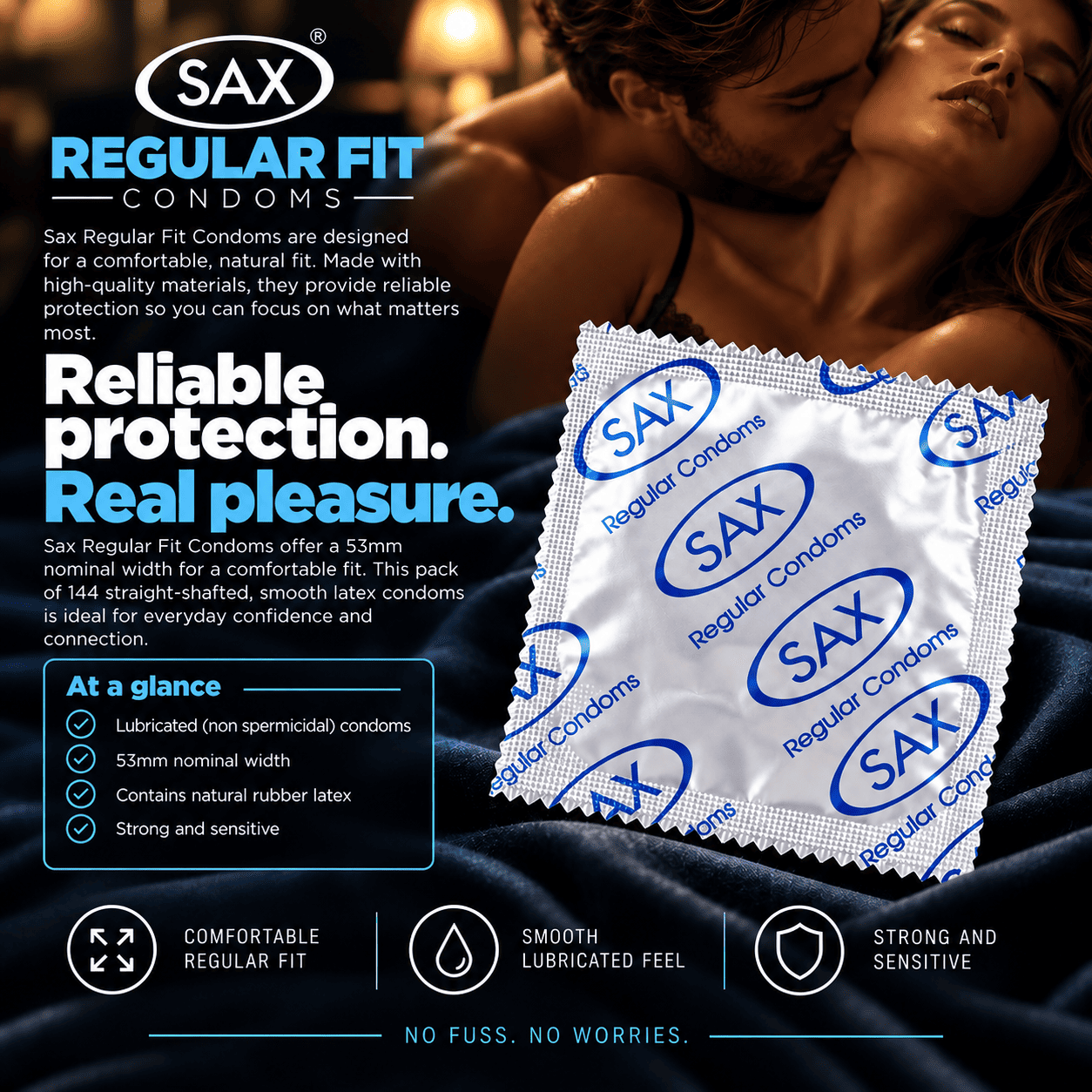
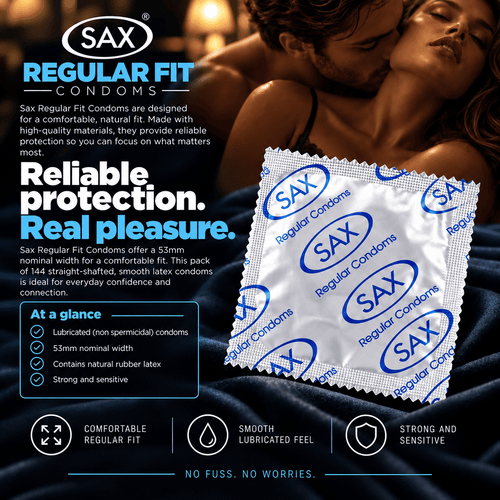
For a regular fit, a low-cost way to test is Sax Regular Fit Condoms, $2.19 at the time of writing. If you'd rather buy a box, the Durex Invisible Regular Fit Condoms 20 Pack is $20.85 at the time of writing.
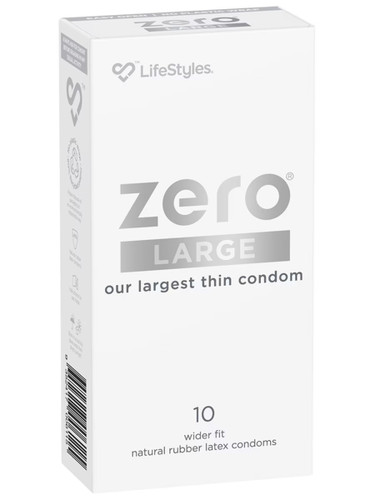
If regular condoms feel tight, the Ansell Lifestyles Zero Large Condoms 10's Retail Pack is $19.95 at the time of writing.
How to measure yourself at home for condom fit
It takes a couple of minutes, in private, with a soft tape measure. Measure girth when fully erect, at the thickest part of the shaft. Wrap the tape around once, keep it flat and write the number down.

Step by step:
- Use a soft sewing tape. No tape? Wrap a piece of string around, mark where it meets, then hold it against a ruler.
- Wrap it around the thickest part of the shaft and read the measurement.
- Compare it with the width ranges in our condom size guide.
- Buy a small pack in that size first, then go up or down if you need to.
The tape only gets you close. Comfort is the real test. A good fit feels secure without pinching and stays put during use.
If you ever have pain, or you're concerned about curvature, see a GP or a sexual-health clinic.
Choosing your first condom size
Never measured and just want somewhere to start? Go with a regular fit. Then trust how it feels. Loose, or keeps slipping: try snug. Tight or uncomfortable: try large.
You can browse our full range of condoms by type and width. Once you've found a size that works, bulk condoms save you reordering every few weeks.
Condoms are designed to help reduce the risk of sexually transmissible infections and pregnancy when used correctly. A comfortable fit makes it easier to use one every time. And changing size is nothing to be embarrassed about. It's no different from finding out you take another shoe size.
Shop the range

FAQ
What is the average penis size?
A 2015 BJU International systematic review of 15,521 men, measured by health professionals, found an average erect length of about 13.1 cm and an average erect girth of about 11.7 cm. Healthy bodies vary widely around those averages.
Why do surveys report larger sizes than clinical studies?
People measuring themselves can round up or measure inconsistently, and self-selected surveys may attract certain respondents. Clinician-measured studies tend to be more consistent.
What condom size do most people need?
Most people find a regular condom with a nominal width of 52 to 54 mm fits comfortably. Snug (49 to 51 mm) and large (56 to 60 mm) sizes are available if regular feels loose or tight.
How do I know if a condom is the wrong size?
A condom that feels very tight, pinches or leaves marks may be too small. One that slips or bunches may be too big. Try a different width and see how it feels.
When should I see a doctor?
If you have pain, or a concern about curvature or anything else, see a GP or sexual-health clinic. This article is general information only.